Most homeowners extend a driveway for one of three reasons. Add a second parked car off the street. Build an RV or trailer pad. Widen a too-narrow approach. The cost math is different from a full new driveway because mobilization is fixed but the area is small. This guide breaks down extension cost in 2026 and the choices that drive it. Run your numbers through the cost calculator first.
Headline number (2026)
Driveway extensions in asphalt run 6 to 12 dollars per square foot installed, with national averages around 7 to 9, in line with the full 2026 cost report. Small extensions skew to the high end because the paving crew has to mobilize a paver, roller, and trucks for a small area.
| Extension type | Size | Typical installed cost |
|---|---|---|
| Single-car parking pad | 10 x 20 ft (200 sq ft) | $1,200 to $2,400 |
| Side strip | 4 x 50 ft (200 sq ft) | $1,200 to $2,400 |
| Boat or trailer pad | 10 x 30 ft (300 sq ft) | $1,800 to $3,600 |
| RV pad (thicker section) | 12 x 30 ft (360 sq ft) | $2,500 to $4,500 |
| Two-car parking pad | 20 x 20 ft (400 sq ft) | $2,400 to $4,800 |
Where the money actually goes
Same buckets as a full driveway, just at smaller scale.
- Asphalt material (25-40%): Same hot mix from the local plant. The National Asphalt Pavement Association tracks national mix pricing.
- Mobilization (20-35%, higher than full driveways): Paver, roller, transfer trucks, crew time. The reason small jobs cost more per square foot.
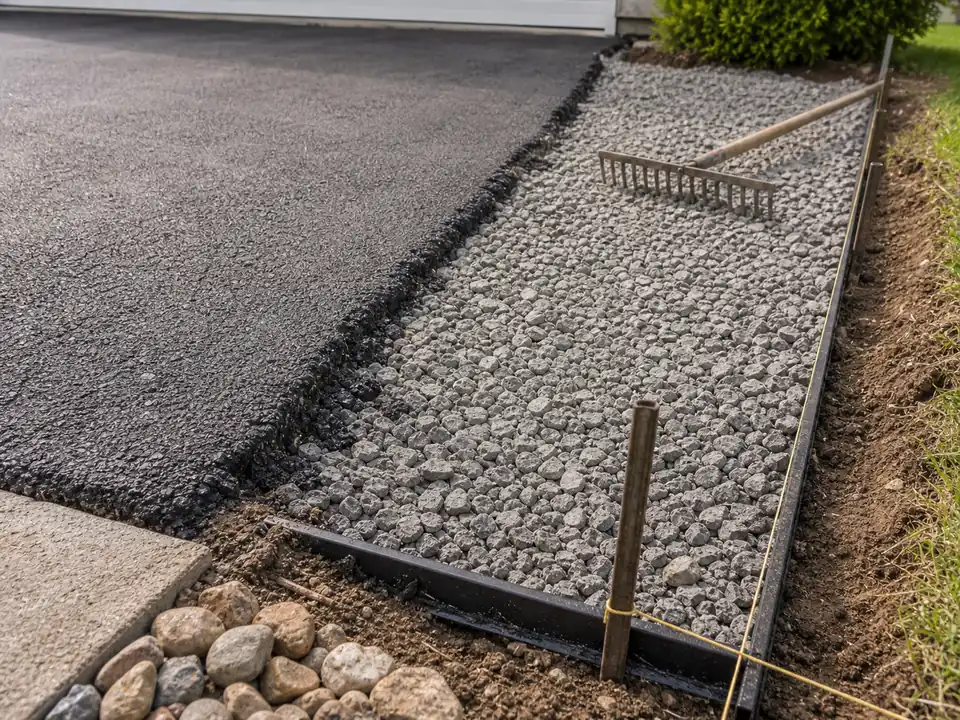
- Base prep (10-20%): Excavation, crushed aggregate, compaction. Critical because the new section must match the structural depth of the existing.
- Tie-in to existing (5-15%): Saw cut on the existing driveway, edge prep, seam treatment. The FHWA pavement program publishes the longitudinal-joint construction guidance that contractors should follow at the seam.
- Hauling and disposal (5-15%): Excavated material out, new aggregate and asphalt in.
The seam where new meets old
The seam is the visible line where the extension joins the existing driveway. It will be visible. New asphalt is darker than aged asphalt. The two surfaces converge in color over 1 to 2 years. A few practical tips:
- Saw-cut the existing driveway. Do not feather the new asphalt over the old. A clean vertical edge gives the tightest seam.
- Tack coat the saw cut. A thin layer of asphalt emulsion bonds new to old.
- Match thickness. The new section should match the compacted thickness of the old. Thinner extensions break out at the seam.
- Sealcoat both at once. Wait 6 to 12 months after install (see when to sealcoat), then sealcoat both surfaces together. The seal blends the look.
RV and heavy vehicle extensions need extra thickness
A standard residential extension is 2.5 to 3 inches compacted asphalt over a 4 to 6 inch base. RV, boat, and heavy trailer pads need more. See our asphalt thickness for RV and heavy vehicle parking guide for the targets. Quick version: 3 to 4 inches compacted asphalt over a 6 to 8 inch base.
Permits and setbacks
Most cities require a permit if the extension changes the curb cut, touches the public right of way, or expands the apron at the street. Side and rear extensions on private property usually do not need permits, but local rules vary. The FTC consumer site recommends pulling permits for any home improvement that touches utilities or the right of way. Your contractor should handle the permit but will pass the cost through.
DIY tradeoff
A new asphalt extension is hot mix paving work, which is paver-and-roller territory. See our DIY asphalt driveway guide for the full DIY-or-not breakdown. Quick version: hot mix is contractor work. But you can DIY base prep, excavation, and edge cleanup before the crew arrives, which saves real money.
Alternatives to a paved extension
- Asphalt millings: 1 to 3 dollars per square foot. Looks similar from a distance but is a different surface. See millings vs gravel.
- Gravel pad: 1 to 4 dollars per square foot. Rural look. Needs regrading every 1 to 3 years.
- Concrete pad: 8 to 15 dollars per square foot. Better for hot climates and heavy point loads. See asphalt vs concrete.
- Pavers (interlocking concrete): 15 to 30 dollars per square foot. Highest curb appeal. Most expensive.
How to get a tight quote
- Measure the new area carefully. Length and width to the foot.
- Note where it ties into the existing driveway.
- Decide thickness based on what will park there.
- Get three quotes. Compare against the same scope. Use our quote checker.
- Ask whether the price changes if you book in shoulder season. See best time to pave.
- Ask whether the contractor will sealcoat both old and new at the right time.
Will it add to home value?
A useful extension that adds an off-street parking spot or RV storage adds resale value in markets where street parking is tight or HOAs require off-street RV storage. The added value usually does not exceed the install cost in normal markets, but the convenience often justifies the spend on its own.
References for the cost ranges and seam best practices are on the sources page.