A new asphalt driveway is safe for pets after it fully cures, which means keeping dogs and cats off it for 3 to 5 days, the same window people use. While it is soft it can burn paws, trap tacky residue, and give off fumes. Once cooled and cured, it is no riskier than any other paved surface. See our curing time guide for the full timeline.
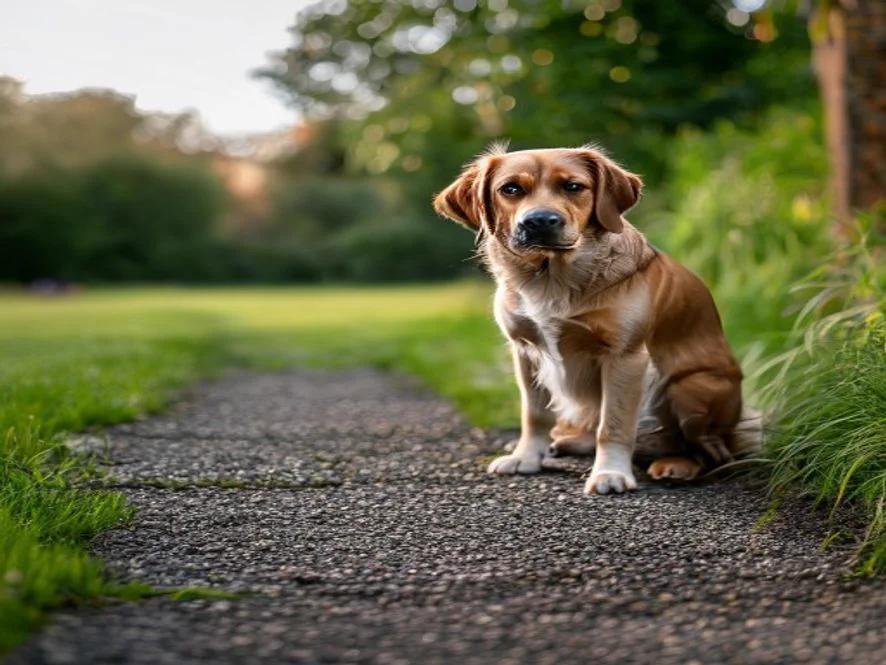
How long should pets stay off a new asphalt driveway?
The simple answer is the same as for people and cars: stay off for the first 3 to 5 days, and longer in hot weather. Hot-mix asphalt looks hard within 24 hours, but the binder is still setting underneath. Light foot traffic from a dog will not crack it, but paws will sink slightly, leave prints, and pick up the sticky black residue that has not finished hardening.
Here is a practical timeline for a pet household:
- First 24 hours. Keep all pets off completely. The surface is hottest and softest now and gives off the most odor.
- Days 2 to 3. Still off-limits. Paws will mark the surface and pick up residue. Fumes are fading but not gone.
- Days 3 to 5. Brief, supervised crossings are usually fine in mild weather. The surface holds firm under a dog's weight.
- Week 2 onward. Normal pet use is fine. The asphalt keeps hardening for up to a year, but it is fully walkable.
If you want the day-by-day breakdown that also covers parking and the full first year, our guide on caring for a new asphalt driveway the first year walks through every stage.
Are fresh asphalt fumes dangerous to dogs and cats?
The smell of a new driveway comes from light hydrocarbons leaving the hot mix as it cools. These are strongest in the first 48 to 72 hours and fade fast once the mat is cool to the touch. The volume that reaches a fenced yard is low, but pets sit closer to the ground, breathe faster than we do, and have far more sensitive noses, so the simple rule is to keep them away from the driveway until the smell is gone.
You do not need to evacuate the house. Just keep dogs and cats indoors or on the far side of the yard for the first two to three days, run a fan toward open windows if the garage smells, and avoid leaving food or water bowls near the work. If you want the fuller picture on what is actually in that odor, we cover it in are asphalt driveway fumes dangerous. For the science on volatile compounds and air quality you can also check the EPA.
Can hot asphalt burn my dog's paws?
This is the bigger year-round risk, and it applies to old asphalt just as much as new. Dark pavement absorbs sun and gets far hotter than the air. On a 77 degree day, asphalt can sit around 125 degrees. On a 90 degree day it can hit 140 degrees or more, hot enough to cause a burn on a paw pad in under a minute. New asphalt is darker than aged gray pavement, so it can run a few degrees hotter in its first season.
Use the seven-second test: press the back of your hand flat on the surface. If you cannot hold it there comfortably for seven seconds, it is too hot for paws. Walk dogs in the early morning or after sunset, stick to grass and shade at midday, and watch for limping, licking, or dark or peeling pads, which are signs of a burn. The CDC and OSHA both flag hot surfaces as a heat hazard worth taking seriously. We dig into this season-long in our post on asphalt driveway dog paws and summer heat, and on whether a driveway gets too hot in general.
Quick check
Pet Re-Entry Checker
Enter how many days ago the driveway was paved and today's high temperature. This gives a quick read on whether it is safe for paws yet. It is guidance, not a vet, so use judgment.
What if my pet walks on the fresh asphalt anyway?
It happens. A gate gets left open, a cat slips out a window, and suddenly there are paw prints across your new driveway. Do not panic, and do not reach for gasoline or paint thinner, which are far more dangerous to a pet than the asphalt itself. Follow these steps:
- Bring the pet in calmly. Keep them off carpet and furniture so the residue does not spread.
- Loosen the asphalt with oil. A small amount of vegetable, olive, or mineral oil on a cloth lifts tar far better than soap. Work it into the residue gently.
- Wash with warm water. Follow with a pet-safe shampoo or dish soap and rinse well. Repeat if needed.
- Check between the toes and pads. Trapped residue is easy to miss in fur and webbing.
- Call your vet if the residue is heavy, the skin looks raw, or your pet keeps licking the area.
The same care applies to little ones, so it is worth reading how long before kids can play on new asphalt while the surface sets.
Is sealcoat safe for pets too?
Sealcoat deserves the same caution as fresh paving, because it is a liquid coating that needs time to dry and cure. Keep pets off until it is fully dry, usually 24 to 48 hours depending on the product, humidity, and temperature. There are two main families of sealer, and the choice matters for a home with animals. Coal-tar sealers are more durable but carry more chemical concern, while asphalt-emulsion sealers are lower odor and the friendlier pick around pets and kids.
If you are weighing the two, our coal-tar versus asphalt-emulsion comparison lays out the trade-offs, and our drying guide explains how long sealcoat takes to dry so you know the exact off-limits window. Industry detail on asphalt materials is available from the National Asphalt Pavement Association.
Bottom line
A new asphalt driveway is safe for pets once it has cured, and the only real homework is timing. Keep dogs and cats off for the first 3 to 5 days while the surface sets and the fumes clear, then watch summer heat year-round, since hot pavement is the one risk that never fully goes away. Choose a low-odor emulsion sealer at maintenance time, keep a clean-up plan ready, and your pets will be just as happy on the new driveway as you are.